· Dustin Greenfield · Drums · 11 min read
Mastering How to Fit a Drum Kit in a Small Room - An Easy Guide
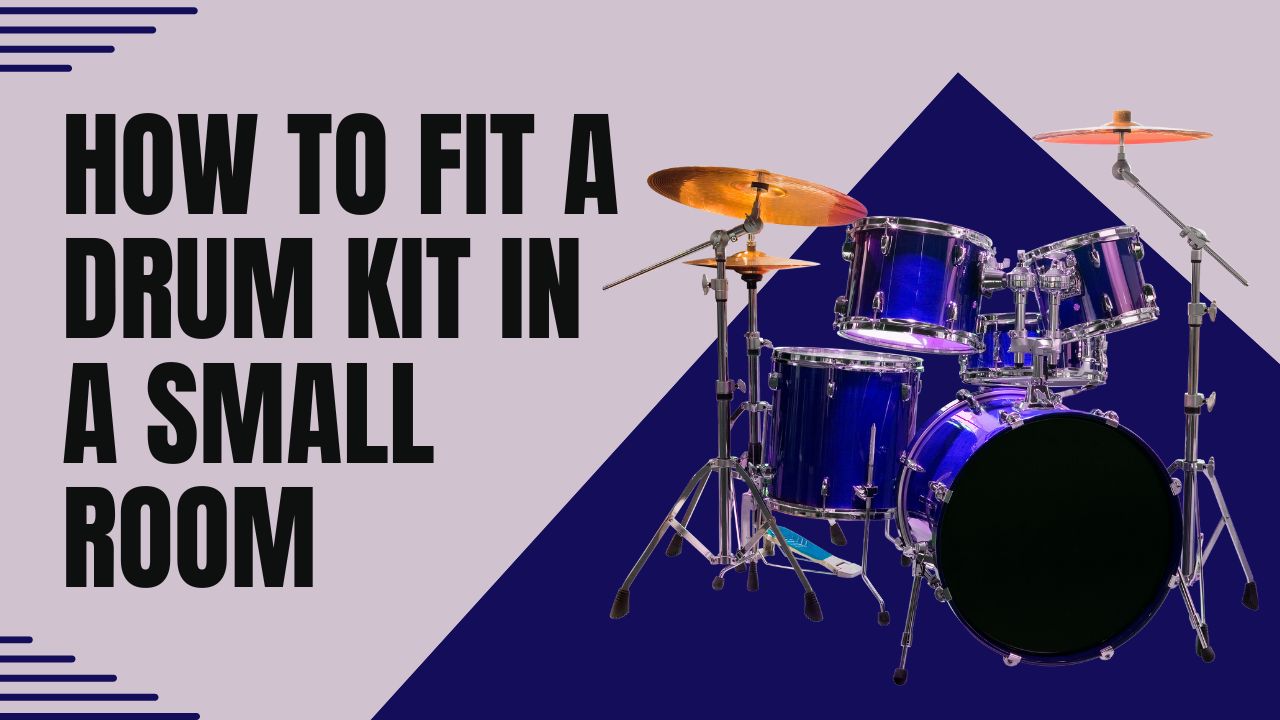
I know firsthand how challenging it can be to fit a full drum kit into a small room without compromising on sound quality or comfort. But fear not, because with some careful planning and strategic optimization, you can achieve the perfect small room drum kit arrangement that suits your needs.
I know firsthand how challenging it can be to fit a full drum kit into a small room without compromising on sound quality or comfort. But fear not, because with some careful planning and strategic optimization, you can achieve the perfect small room drum kit arrangement that suits your needs.
In this guide, I will share my top tips on how to fit a drum kit in a small room, optimizing your drum set for small rooms, and achieving the best possible sound quality.
Key Takeaways
- 💡 Assess your space and plan your kit layout wisely to ensure practicality and comfort, considering dimensions and obstructions in the room.
- 🎵 Opt for space-saving setups such as compact drum kits, multipurpose hardware, and vertical arrangements to make optimal use of a small room.
- 🎧 Minimize noise by investing in acoustic treatment materials and making adjustments to your drum kit configuration to respect the neighbours or housemates.
- 📦 Implement intelligent storage solutions and an efficient drum kit arrangement to get the most out of your limited space.
- 🔍 Take time to experiment with different drum setups and sound proofing techniques to achieve the best sound quality from your kit in a small room setting.
Also read Https://Styleofpop.Com/Guitar Blister
Assessing How to Fit a Drum Kit in a Small Room: Space Evaluation and Planning
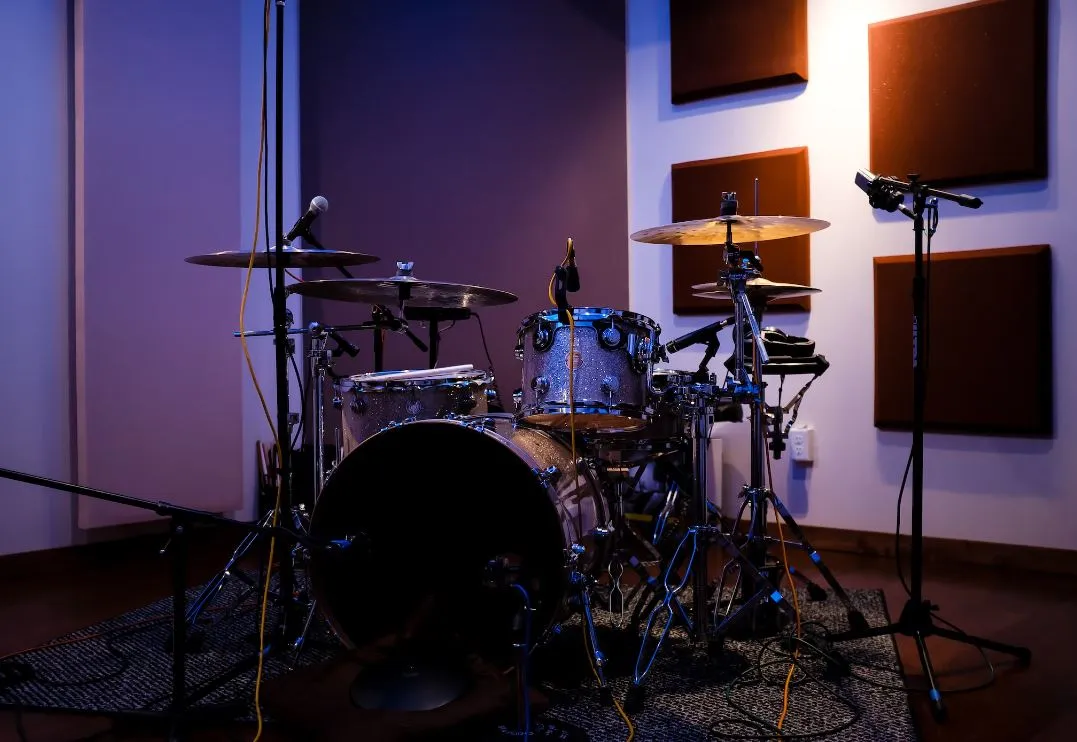
When working with limited space, it’s essential to assess the available area and plan your drum kit placement accordingly. By doing so, you can ensure that you optimize your space while maintaining a comfortable and practical setup.
Firstly, measure the dimensions of the room to determine the available space for your drum kit. Next, consider other items in the room, such as furniture or equipment, that may impact your drum kit placement. This will help you visualize how your drum kit arrangement will fit into the space and enable you to make necessary adjustments.
When planning your drum kit placement, prioritize practicality and comfort. Ensure that your snare drum, kick drum, and hi-hat are easily accessible, as these are the most frequently used components of the drum kit. It’s also crucial to optimize your space by arranging your drum kit components in a way that maximizes the available area.
Moreover, consider your sitting position when positioning your drum kit components. Make sure you have enough space for your throne and that it’s not too close to the wall or any other obstructions. This will ensure you are comfortable and have enough room to play the drums effectively.
Also read Https://Styleofpop.Com/Should You Pop Guitar Blisters
How to Fit a Drum Kit in a Small Room: Space-Saving Setups
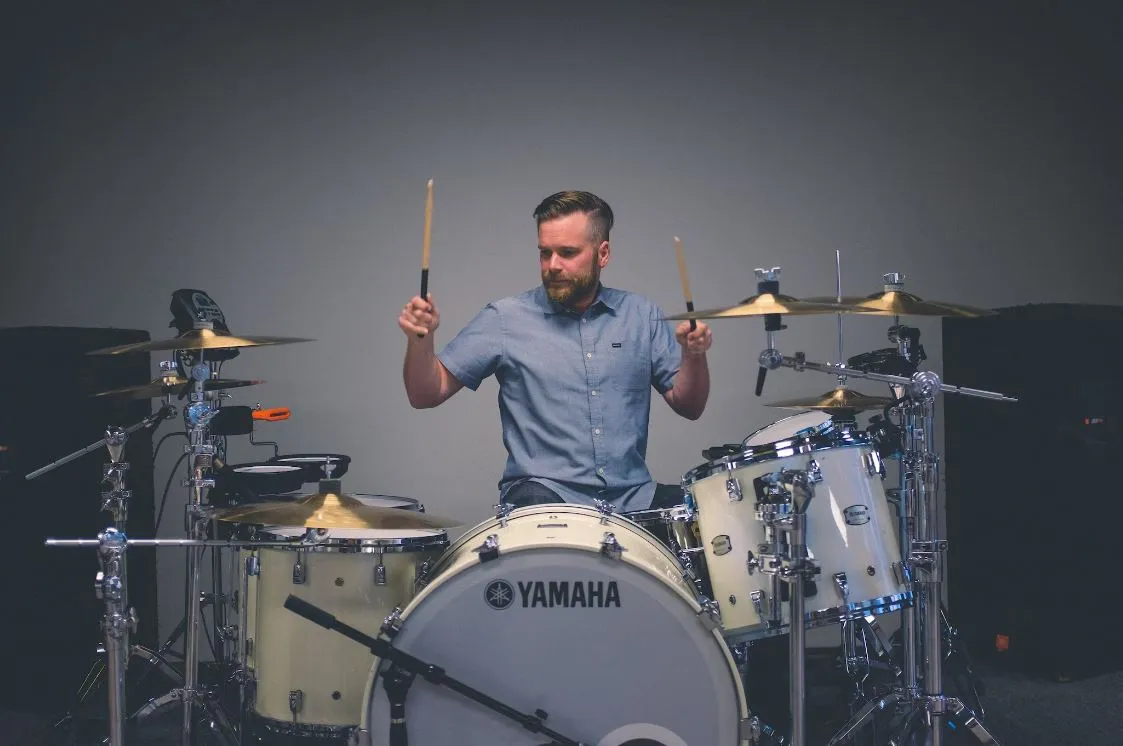
When dealing with a small room, it’s crucial to optimize your drum kit’s setup to maximize space. Here are some tips for achieving a space-saving drum kit setup:
- Choose a compact drum kit: Look for a drum kit that’s specifically designed for small spaces, with smaller bass drums and toms. This will help reduce the overall footprint of your kit while still providing a great sound.
- Use multi-purpose hardware: Consider purchasing hardware that can serve multiple purposes, such as a cymbal stand that can also hold a tom.
- Position drums strategically: Experiment with different positions for your drums to find the most space-efficient arrangement. For example, placing your snare and hi-hat closer together can free up valuable real estate.
- Utilize vertical space: Don’t just focus on floor space - consider using vertical space as well. Hang cymbals and toms from a rack or stands to free up floor space and give your kit a unique look.
- Invest in a drum kit riser: A drum kit riser can help elevate your kit and free up floor space, making it easier to move around and reducing the overall footprint of your kit.
- Try electronic drums: If space is really limited, consider using electronic drums. They take up less space than acoustic drums and can be used with headphones to minimize noise.
By implementing these space-saving drum kit setup tips, you’ll be able to fit your drum kit comfortably into even the smallest of rooms without sacrificing sound quality or functionality.
Also read Https://Styleofpop.Com/Drum Booth Size
Noise Control and Acoustic Treatment for Fitting a Drum Kit in a Small Room
One of the most significant challenges of setting up a drum kit in a small room is controlling the noise levels. With limited space, you need to be strategic about how you organize your drum kit to minimize the impact on your neighbors or other people in the house.
One way to reduce noise is to invest in acoustic treatment materials. These can include sound-absorbing panels, carpets, and curtains. By strategically placing these materials around your drum kit, you can absorb some of the sound waves and prevent them from bouncing around the room.
In addition to acoustic treatment, you can also consider adjusting your drum kit’s configuration to minimize noise. For example, you might place a rug or padding under your bass drum pedal to prevent it from making too much noise when you play. You can also consider using quieter cymbals or drum heads to reduce the overall volume.
Ultimately, finding the right balance between sound quality and noise control can take some experimentation. But by being intentional about your drum kit organization, you can create a setup that sounds great and is respectful of your neighbors or housemates.
Also read Https://Styleofpop.Com/Post Hardcore Vs Metalcore
Making the Most of Limited Space
When it comes to organizing a drum kit in a small room, every inch counts. Here are some additional strategies for maximizing your space:
Utilize Vertical Space
Think beyond floor space and look up! Hang cymbals, tambourines, and other percussion instruments on the wall using hooks or stands. Consider using a multi-tiered rack for your drums to save valuable floor space.
Use Storage Solutions
Keep clutter to a minimum by storing drumsticks, accessories, and other equipment in drawers or cabinets. You can also use storage bins to keep items organized and out of the way.
Arrange Your Drum Kit Efficiently
Experiment with different arrangements to find what works best for your space. Consider using a smaller bass drum or stacking toms to save space. Keep in mind that a compact setup can also be more ergonomic and easier to play.
By incorporating these space-saving tips into your drum kit organization, you can create a comfortable and functional practice space even in the smallest of rooms.
Also read Https://Styleofpop.Com/Evans G2 Clear Vs Remo Emperor
How Much Space Does a Drum Set Take Up?
One of the most common questions drummers ask is: “How much space does a drum set take up?” The answer depends on the size of your kit, but here are the specific measurements you need to know.
Standard 5-Piece Drum Kit Dimensions
A standard 5-piece drum kit (bass drum, snare, two rack toms, and one floor tom) typically requires:
- Width: 5-6 feet (60-72 inches)
- Depth: 4-5 feet (48-60 inches)
- Height: 3-4 feet (36-48 inches) for the drums themselves
- Total Floor Space: Approximately 20-30 square feet
This measurement includes the space needed for:
- The drum kit itself
- Cymbal stands
- Hi-hat stand
- Drum throne (stool)
- Room for the drummer to sit and move
Compact Drum Kit Dimensions
A compact or “bop” kit with smaller drums requires less space:
- Width: 4-5 feet (48-60 inches)
- Depth: 3-4 feet (36-48 inches)
- Total Floor Space: Approximately 12-20 square feet
Compact kits typically feature:
- 18” or 20” bass drum (instead of 22”)
- Smaller toms (10” and 12” instead of 12” and 13”)
- Fewer cymbals
Space Needed Including Player and Throne
When calculating total space needed, don’t forget to account for:
- Drummer’s seating area: 2-3 feet in diameter for the throne
- Leg room: Additional 1-2 feet in front of the bass drum for pedals
- Arm movement: 1-2 feet on each side for cymbal and tom access
- Total recommended space: 6-8 feet wide by 6-7 feet deep (36-56 square feet)
Minimum Room Size Requirements
For a standard 5-piece kit, the absolute minimum room size should be:
- 8 feet by 8 feet (64 square feet) - This is tight but workable
- 10 feet by 10 feet (100 square feet) - Comfortable for most setups
- 12 feet by 12 feet (144 square feet) - Ideal for comfortable playing
For a compact kit, you can get away with:
- 6 feet by 6 feet (36 square feet) - Very tight, minimal setup
- 8 feet by 8 feet (64 square feet) - Comfortable for compact kits
Interactive Drum Space Calculator
Use our interactive calculator below to get precise space requirements for your specific drum kit configuration:
Drum Kit Space Calculator
Calculate how much space your drum kit needs. Enter your kit configuration below to get precise measurements.
Space Requirements
Kit Footprint:
Dimensions:
Minimum Room Size:
Recommended Room Size:
Tips:
For more detailed calculations and additional tools, visit our Drum Space Calculator page.
Comparing Different Kit Sizes and Space Requirements
Different drum kit configurations require varying amounts of space:
4-Piece Kit (Minimal Setup)
- Space Required: 4-5 feet wide × 3-4 feet deep (12-20 square feet)
- Components: Bass drum, snare, one rack tom, one floor tom
- Best For: Small rooms, jazz, minimal setups
5-Piece Kit (Standard)
- Space Required: 5-6 feet wide × 4-5 feet deep (20-30 square feet)
- Components: Bass drum, snare, two rack toms, one floor tom
- Best For: Most genres, average-sized rooms
6-Piece Kit (Extended)
- Space Required: 6-7 feet wide × 5-6 feet deep (30-42 square feet)
- Components: Bass drum, snare, two rack toms, two floor toms
- Best For: Larger rooms, rock and metal genres
7-Piece Kit (Full Setup)
- Space Required: 7-8 feet wide × 6-7 feet deep (42-56 square feet)
- Components: Bass drum, snare, three rack toms, two floor toms
- Best For: Large rooms, professional studios, live performances
Electronic Drum Kit
- Space Required: 3-4 feet wide × 3-4 feet deep (9-16 square feet)
- Components: Compact pad setup, module, throne
- Best For: Very small spaces, apartments, noise-sensitive environments
Visual/Spatial Layout Examples
Corner Setup (Space-Efficient)
Placing your drum kit in a corner can save significant space:
- Position the bass drum facing the corner
- Arrange toms and cymbals in a compact arc
- This setup can reduce the footprint by 20-30%
Center Room Setup (Traditional)
Traditional center placement requires more space but offers:
- Better sound distribution
- More flexibility in arrangement
- Easier access from all sides
Wall Setup (Compact)
Positioning the kit against a wall:
- Reduces space needed on one side
- Allows for closer placement to other furniture
- Can work well in rectangular rooms
Frequently Asked Questions: Drum Kit Space Requirements
How much space does a drum set take up?
A standard 5-piece drum kit takes up approximately 20-30 square feet of floor space, measuring roughly 5-6 feet wide by 4-5 feet deep. This includes space for the drums, cymbals, stands, and throne. With room for the drummer to play comfortably, you’ll need about 36-56 square feet total.
What’s the minimum room size for a drum kit?
The absolute minimum room size for a standard 5-piece drum kit is 8 feet by 8 feet (64 square feet), though this is quite tight. A more comfortable minimum is 10 feet by 10 feet (100 square feet). For compact kits, you can get away with 6 feet by 6 feet (36 square feet) minimum.
How much space does a compact drum kit take up?
A compact drum kit typically takes up 12-20 square feet, measuring about 4-5 feet wide by 3-4 feet deep. These kits use smaller bass drums (18” or 20” instead of 22”) and fewer toms, making them ideal for small rooms.
Can I fit a drum kit in a small bedroom?
Yes, you can fit a drum kit in a small bedroom, but you’ll likely need a compact kit. A typical small bedroom (10’ × 10’ or 100 square feet) can accommodate a compact 4-piece or 5-piece kit with careful arrangement. Consider using acoustic treatment to manage sound.
How much space do I need for an electronic drum kit?
Electronic drum kits take up significantly less space than acoustic kits, typically requiring only 9-16 square feet (3-4 feet wide × 3-4 feet deep). They’re ideal for very small spaces and apartments where noise is a concern.
What’s the best way to arrange a drum kit in a small room?
The best arrangement for a small room is to place the kit in a corner, with the bass drum facing the corner. This corner setup can reduce the footprint by 20-30% compared to center placement. Use compact hardware and consider mounting toms on the bass drum to save space.
Conclusion
In conclusion, setting up a drum kit in a confined space need not be an insurmountable challenge. With thoughtful evaluation of available space, innovative space-saving strategies, and a focus on noise control, even the coziest of rooms can be transformed into a drummer’s haven. Whether you opt for compact drum kits, embrace vertical storage, or invest in acoustic treatments, the key lies in meticulous planning and continuous experimentation. Remember, the goal isn’t just to fit your drum kit into a small room, but to create a space where you can play comfortably, achieve optimal sound quality, and respect those around you. With the insights provided in this guide, you are well-equipped to make the most of your limited space and let your drumming passion resonate.